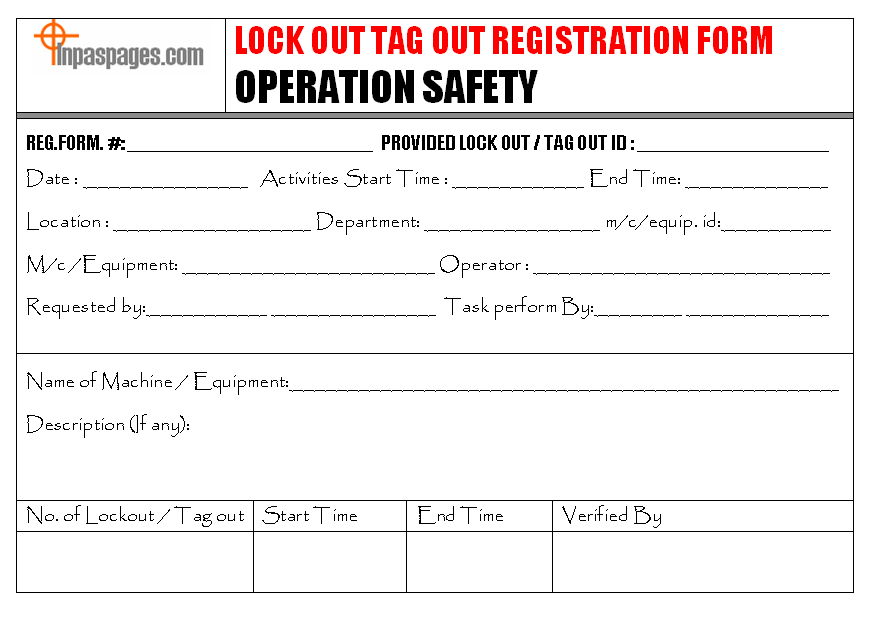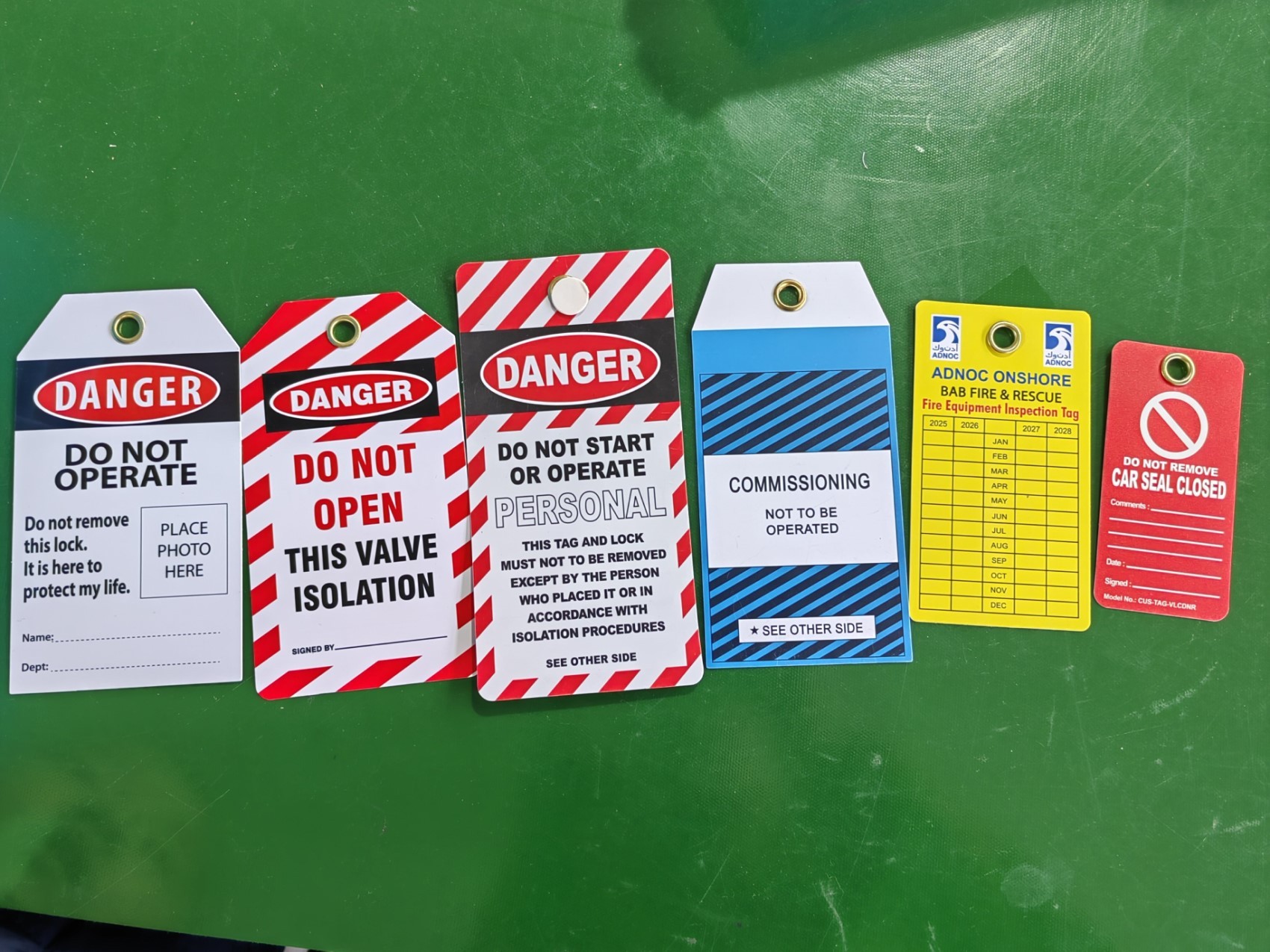
Equipment doesn’t shut down on its own when maintenance begins. Without proper safeguards, residual energy—electrical, mechanical, hydraulic, or thermal—can turn a routine repair into a life-threatening event. That’s where lockout tagout (LOTO) procedures come in. At the core of these procedures are LOTO tags, which serve as both a warning and a communication tool. But not just any tag will do. Lockout tagout tags must have specific elements to be effective, legally compliant, and capable of preventing human error.
A missing name, illegible text, or absence of hazard details can render a tag useless—or worse, misleading. In high-risk environments, ambiguity kills. This article breaks down exactly what lockout tagout tags must have, why each component matters, and how to implement them correctly across real-world operations.
Why Lockout Tagout Tags Are Non-Negotiable
Lockout tagout tags aren’t optional accessories—they’re legal requirements under OSHA 29 CFR 1910.147. Their purpose is straightforward: communicate that equipment is unsafe to operate and explain who is responsible for the lockout. While locks physically prevent energy release, tags provide the critical context.
Tags serve three primary functions: - Warning: Alert others that equipment is under maintenance. - Accountability: Identify the authorized employee who applied the tag. - Information: Specify the type of hazard, energy source, and duration of the lockout.
Without tags, even the best lock systems fail. Consider a technician returning from break and seeing a locked valve. If there’s no tag explaining who locked it or why, the temptation to remove it—especially under production pressure—increases dramatically. That’s how accidents happen.
7 Elements Lockout Tagout Tags Must Have
To meet OSHA standards and real-world safety demands, every LOTO tag must include the following:
1. Employee Name and Contact Information A tag without a name is anonymous—and therefore untrustworthy. The authorized employee applying the lock must be clearly identified. This isn't just about responsibility; it enables direct communication. If a supervisor needs to verify a lockout, they should know exactly who to contact.
Example: "Locked by: Maria Chen – Ext. 3282" is far more effective than "Maintenance in progress."
2. Date and Time of Lockout Application Time matters. Equipment may be locked out for minutes or days. Without a timestamp, others can’t assess urgency or validity. Tags should show both the date and time the lock was applied to prevent unauthorized removal after shift changes or extended downtimes.
Common mistake: Using only the date. A lockout initiated at 8:00 PM on Monday is very different from one at 8:00 AM.
3. Specific Reason for Lockout “Under maintenance” is too vague. Lockout tagout tags must have a clear description of the work being performed. This helps other workers understand the scope and risk.
Acceptable: “Replacing conveyor drive motor – electrical isolation in progress.” Unacceptable: “Fixing machine.”
4. Type of Energy Being Controlled Different energy sources require different precautions. A tag should specify whether the hazard is electrical, pneumatic, hydraulic, thermal, or gravitational.
Example: “High-pressure steam system – valve isolation in progress.” This tells others not only what’s being worked on but also what could go wrong if the lock is bypassed.
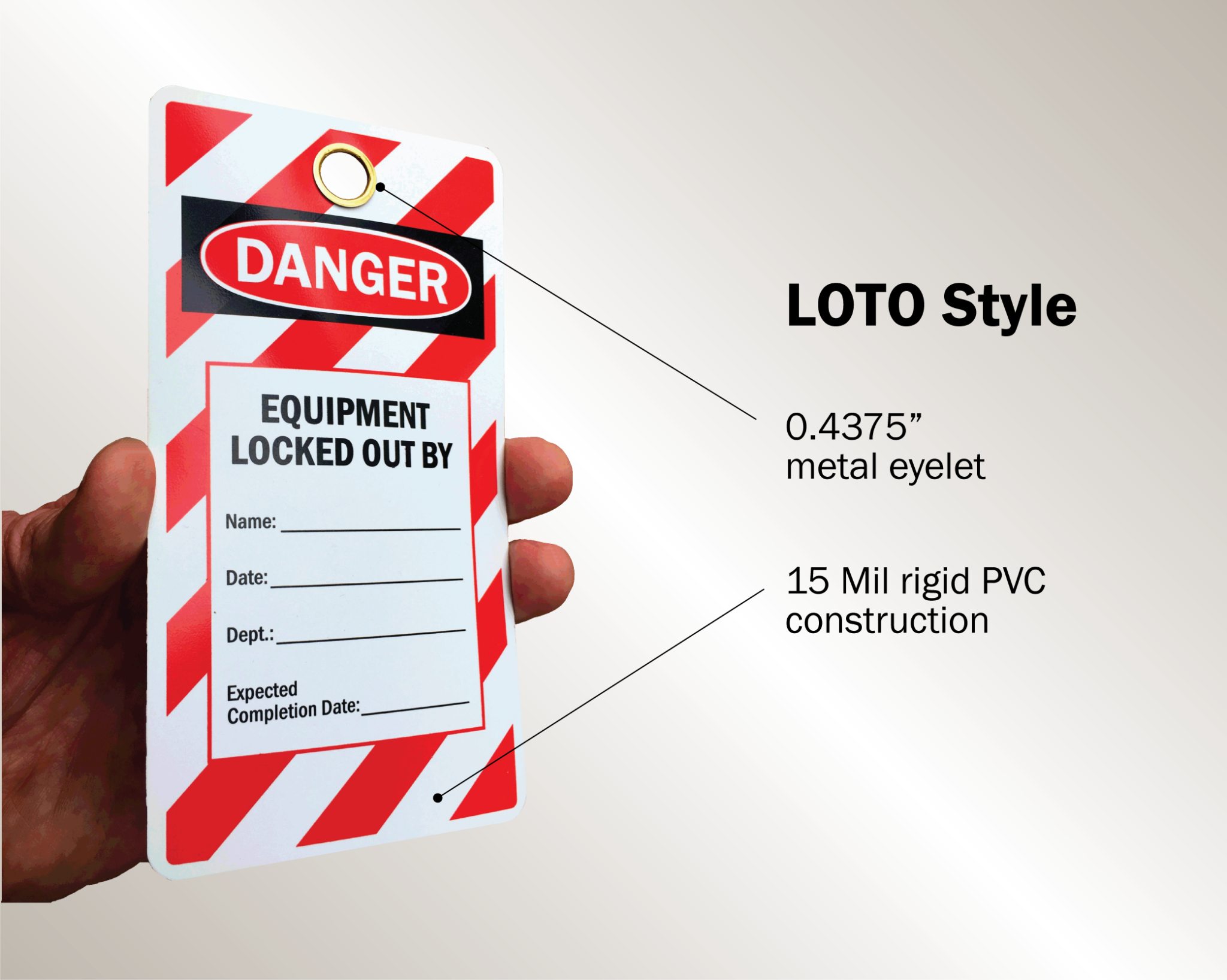
5. Equipment Identification Tags must clearly identify the machine or component. Use serial numbers, asset IDs, or location codes—especially in facilities with duplicate equipment.
Use: “Pump #4 – North Cooling Tower” Avoid: “This pump”
6. Do Not Operate Warning in Clear Language The phrase “Do Not Start,” “Do Not Operate,” or “Do Not Energize” must be prominently displayed. OSHA accepts these variations, but the message must be unambiguous. Use high-contrast colors (red, yellow, or orange) and bold lettering.
Tip: Bilingual tags are essential in multilingual workplaces. A Spanish-English tag saying “No Operar / Do Not Operate” prevents miscommunication.
7. Duration or Expected Completion Time (When Applicable)
While not always required, adding an estimated completion time improves coordination. It reduces unnecessary checks and prevents premature removal. For long jobs, include a note like “Work in progress – expected completion: 3 PM.”
Real-world impact: In a 2021 incident at a Midwest manufacturing plant, a tag lacked a time reference. A night-shift worker assumed it was outdated and removed the lock, causing a hydraulic release that injured a technician.
Common Mistakes That Render LOTO Tags Ineffective
Even with the right elements, poor execution undermines safety. Here are frequent failures:
- Handwritten tags with illegible writing – If a name or hazard can’t be read, the tag is useless. Use pre-printed or laminated tags with fillable fields.
- Tags placed too far from the lock – A tag dangling from a nearby pipe is easily missed. Tags must be attached directly to the lock or lockout point.
- Generic or reusable tags – Tags should be single-use. Reusing a tag risks outdated information.
- Lack of durability – Paper tags in wet environments disintegrate. Use weather-resistant, tear-proof materials.
Workflow tip: Conduct weekly spot checks on LOTO tags. Audit for completeness, placement, and condition. Document findings and retrain as needed.
Choosing the Right LOTO Tag Material and Design
Not all tags are created equal. The environment dictates the best choice.
| Environment | Recommended Tag Material | Why It Matters |
|---|---|---|
| Indoor, dry areas | Polyester or laminated paper | Cost-effective, printable |
| Outdoor or humid areas | Vinyl or polypropylene | Water-resistant, UV-stable |
| High-heat zones | Silicone-coated or fiberglass | Withstands extreme temperatures |
| High-traffic areas | Reinforced with grommets | Prevents tearing from movement |
Color coding strengthens communication: - Red – Stop, danger, do not operate - Yellow – Caution, warning - Orange – Mechanical hazard
Use standardized templates across departments. Consistency reduces confusion during emergencies.
Some facilities are adopting digital lockout systems with QR codes or RFID tags. While technology improves tracking, OSHA still requires that physical tags remain on equipment during servicing.
Digital systems can enhance compliance but can't replace field-readable tags. A QR code tag must still display the core elements: name, date, reason, and warning—even if additional data is stored digitally.
Limitation: In power outages or network failures, digital systems may be inaccessible. Physical legibility is non-negotiable.
That said, hybrid systems offer advantages: - Real-time lockout tracking - Automated notifications - Audit trail generation
But remember: digital tools support the process—they don’t eliminate the need for tags that must have all required information visible at the point of use.
Real-World Use Cases: When LOTO Tags Prevented Disasters
![Improving Workplace Safety with Lockout Tagout [2020] | Seton](https://www.seton.com/resource-center/wp-content/uploads/2016/06/lockout-tags.jpg)
Case 1: Chemical Plant in Texas A maintenance team isolated a reactor vessel for internal inspection. The LOTO tag included: - Technician name and extension - “High-pressure chemical vessel – internal cleaning” - “Do Not Pressurize – Toxic Residue” - Date and time: 06/14, 7:15 AM
Two hours later, operations tried to restart the line. The tag’s specificity prevented an accidental pressurization that could have released hazardous fumes.
Case 2: Automotive Assembly Line A robotic arm required servo motor replacement. The tag noted: - “Locked by: James Reed – Robotics Team” - “Electrical and pneumatic isolation” - “Do Not Energize – Worker inside guard”
A supervisor attempted to override the lock for production. The clearly labeled tag prompted a safety review instead of a bypass—avoiding potential crush injuries.
These cases prove that tags with complete information don’t just follow rules—they save lives.
Actionable Steps to Audit and Improve Your LOTO Tags
Start today. Don’t wait for an incident or audit.
- Inspect all current tags – Walk the floor. Check for missing elements, poor legibility, or incorrect placement.
- Standardize tag templates – Create master templates that include all seven required elements.
- Train employees on proper use – Focus on real consequences of incomplete tagging.
- Use durable, standardized materials – Invest in weather-resistant, tamper-evident tags.
- Integrate into LOTO procedures – Make tag completion a mandatory step in every lockout checklist.
Pro tip: Run a “tag scavenger hunt” during safety meetings. Have teams find and evaluate real tags. It builds awareness and identifies gaps.
Final Thought: Tags Are More Than Paper — They’re a Safety Contract
Lockout tagout tags must have more than just words—they must carry weight. Every tag is a promise: “This equipment is unsafe. I am responsible. Do not interfere.” When tags lack critical details, that promise breaks.
Compliance isn’t about checking boxes. It’s about ensuring that every worker, on every shift, can look at a tag and understand the risk without guessing. Clarity, accountability, and durability aren’t optional extras—they’re the foundation of a safe workplace.
Equip your team with tags that meet OSHA’s requirements and exceed operational expectations. Because when seconds count, a well-designed tag isn’t just paperwork—it’s protection.
Frequently Asked Questions
What information must be on a lockout tag? A lockout tag must include the employee’s name, date and time of application, reason for lockout, type of energy controlled, equipment ID, and a “Do Not Operate” warning.
Can LOTO tags be reused? No. Tags should be single-use to prevent outdated or incorrect information from being accidentally applied.
Are digital LOTO tags compliant with OSHA? Only if they are paired with a physical tag that displays all required information visibly at the lockout point.
What happens if a LOTO tag is missing information? Missing details violate OSHA standards and increase the risk of accidental energization, potentially leading to injuries or citations.
Should LOTO tags be bilingual? Yes, in workplaces with multilingual staff. Bilingual tags ensure all employees understand the warning.
Can a lock replace a tag? No. Locks and tags serve different purposes. A lock provides physical control; a tag provides communication. OSHA requires both.
How durable should LOTO tags be? Tags must withstand environmental conditions (moisture, heat, abrasion) and remain legible for the duration of the lockout.
FAQ
What should you look for in Lockout Tagout Tags Must Have Key Elements for Safety? Focus on relevance, practical value, and how well the solution matches real user intent.
Is Lockout Tagout Tags Must Have Key Elements for Safety suitable for beginners? That depends on the workflow, but a clear step-by-step approach usually makes it easier to start.
How do you compare options around Lockout Tagout Tags Must Have Key Elements for Safety? Compare features, trust signals, limitations, pricing, and ease of implementation.
What mistakes should you avoid? Avoid generic choices, weak validation, and decisions based only on marketing claims.
What is the next best step? Shortlist the most relevant options, validate them quickly, and refine from real-world results.